
Descend into Madness
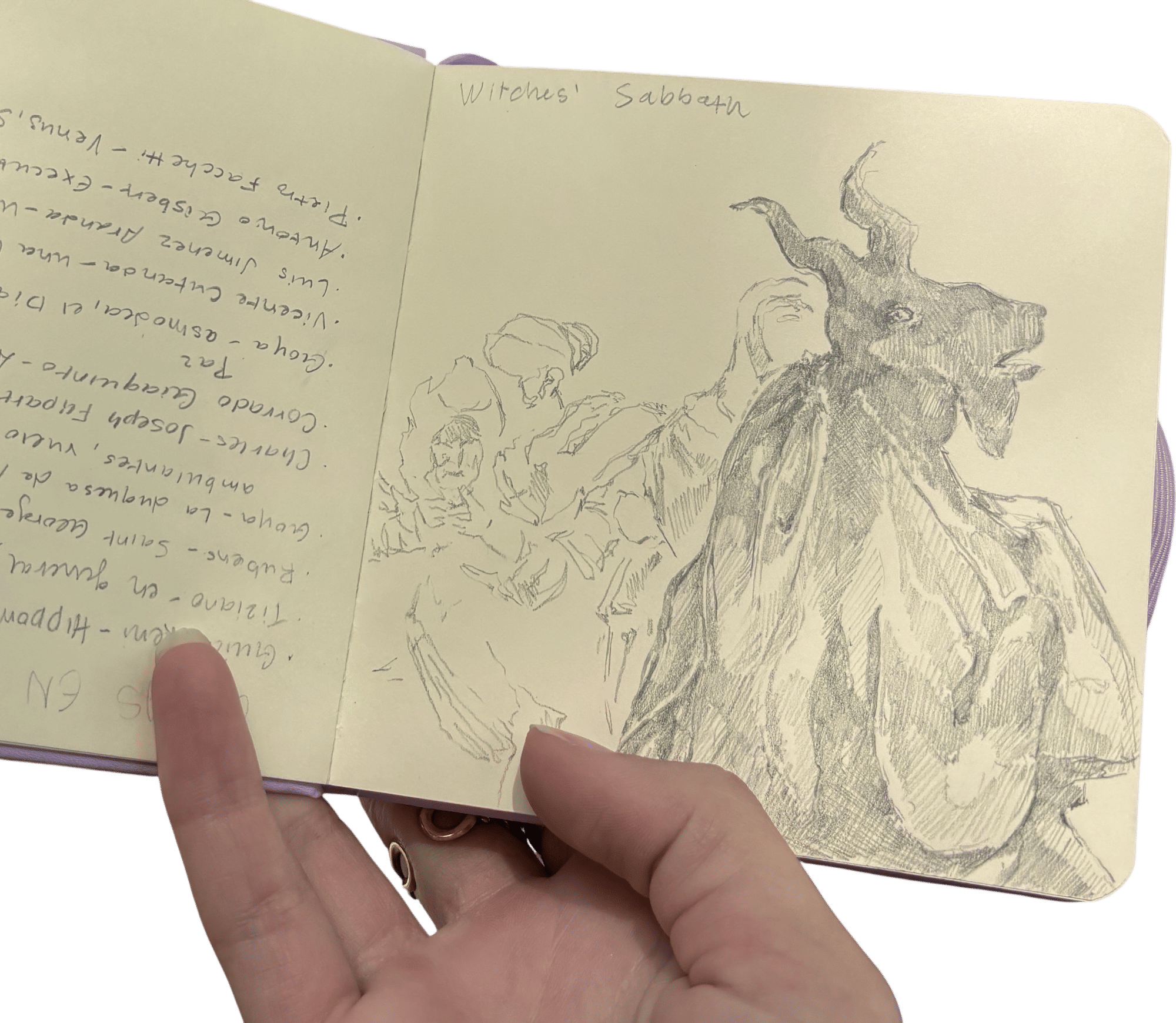
A highly acclaimed court painter for the Spanish Crown, Francisco de Goya began to integrate political overtones into his work, most significantly in the monumental works The Second of May and The Third of May, which depicted the violence of Napoleon's invasion of Spain in 1808.
Most compelling in my opinion, however, are Goya's dark paintings, executed between 1820-1823. Originally painted directly upon the walls of Quinto del Sordo - Goya's home on the outskirts of Madrid - the series is now displayed in El Prado. The works themselves are dim, nonsensical, and anguished in nature, painted with rough and desperate brushstrokes. Spirits, witches, and violence populate the frames, engaged in actions futile, disturbing, and along the fringe of society.
There is no exact understanding of what prompted Goya's dark paintings. Disillusionment from war, isolation, and deafness have all been considered, but as a whole, the series largely remains a mystery. What I find particularly fascinating about Goya is his transition from one form of artist to another throughout his lifetime. His paintings, at first illustrative depictions of religious scenes and courtly figures, transformed into deeply profound reflections of the human soul. In this way, he evolved from what was expected of a typical eighteenth century artist into a true modern artist, driven by his own personal afflictions and interests.
I am enamored with the life and emotion imbued in all of Goya's works, even his earlier portraits, but the pieces created at the end of his life truly have my heart.
Dive deep, deep, deep inside yourself as Goya once did and see what comes of it. I promise, I will do the same.
2 months ago
Comments


Follow Juliet Blehm
By submitting, you agree to our Terms and Privacy Policy